Innovation in the Observability Stack for AI Content Workflows
Why Observability Is the Innovation Layer
AI content workflows fail in subtle ways. A draft can look fluent, yet miss tone, facts, or editorial policy. For engineering leaders, the challenge is not only generating content faster. It is making the workflow explainable enough to improve safely.
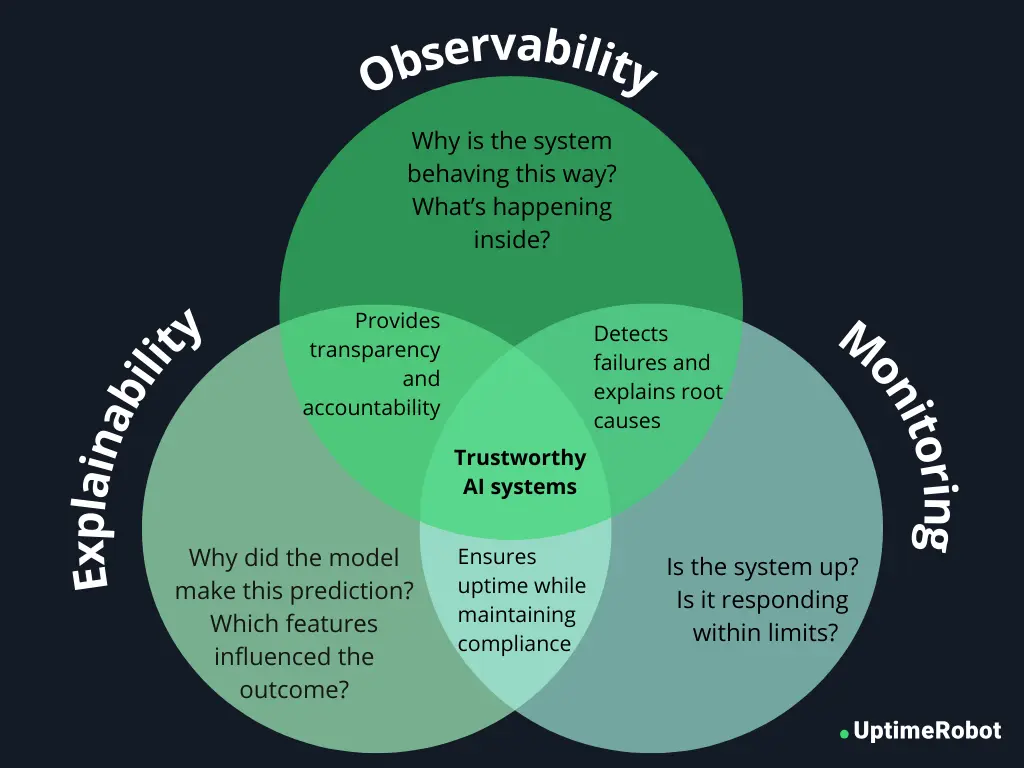
That is where observability becomes strategic. In AI editorial systems, the best stacks do more than capture uptime and latency. They reveal how prompts, retrieval, model choice, human review, and publishing decisions interact.
Innovation in AI editorial operations is not about adding another model. It is about making the whole content pipeline legible enough to improve every step of it.
The Core Signals to Instrument
Start with the smallest set of signals that can answer operational and editorial questions. If you cannot trace a bad article back to its inputs, you cannot learn from it.
- Prompt version, template, and caller identity
- Model name, temperature, token counts, and latency
- Retrieved sources and ranking scores
- Human edits, rejection reasons, and approval time
- Published engagement, corrections, and rollback events
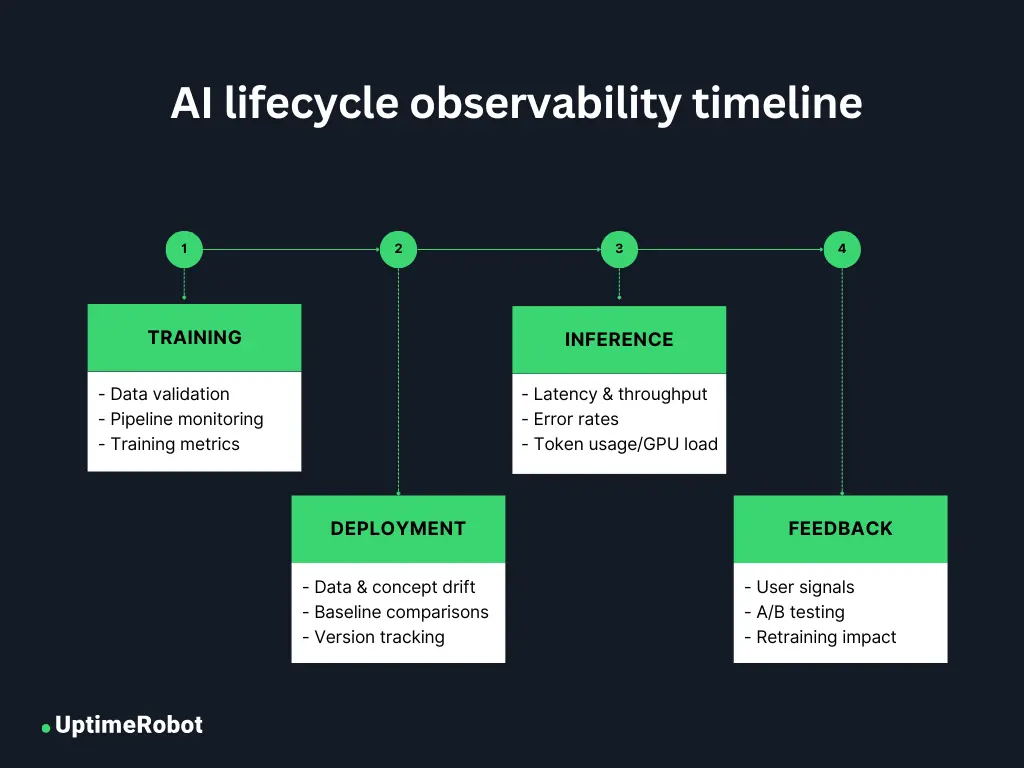
These signals should be joined by content ID so every draft has a complete lifecycle. That single practice turns isolated events into a usable narrative.
Reference Architecture for an AI Content Workflow
Think in layers. The best architecture separates generation, evaluation, orchestration, and analytics so each can evolve independently.
At the center, use an event stream or append-only log. Every meaningful action emits a structured event. From there, route telemetry into three destinations:
- A metrics layer for service health and throughput
- A trace layer for end-to-end content lineage
- A warehouse or lakehouse for editorial and business analysis
This design gives engineering teams both real-time and historical visibility. It also keeps observability from becoming a brittle point solution tied to one model provider.
What Makes AI Content Workflows Hard to Observe
Traditional systems fail fast. AI systems often fail plausibly. That makes them harder to catch and more expensive to investigate.
Common blind spots include prompt drift, silent retrieval failures, hallucinated citations, and overreliance on human editors to catch every issue. If review comments are not structured, the organization loses the chance to detect patterns.
Use categorical labels for editorial outcomes such as factual error, style mismatch, weak structure, duplicated angle, or compliance risk. Those labels are far more useful than freeform notes when you are looking for system-wide trends.
Designing for Feedback Loops, Not Just Monitoring
Monitoring tells you what happened. Feedback loops tell you what to change next.
For AI editorial systems, the highest-value loop usually connects content quality back to upstream decisions. That means correlating editor effort, revision count, and publication performance with prompt variations and retrieval quality.
Focus on a few actionable questions:
- Which prompt patterns produce the lowest edit burden?
- Which retrieval sources correlate with factual corrections?
- Which model settings increase approval speed without reducing quality?
- Which content types benefit most from human-in-the-loop review?
Once those questions are measurable, the organization can test improvements instead of debating them.
Operational Principles for Engineering Leaders
Keep the stack simple enough for teams to maintain under pressure. A sprawling observability platform creates more noise than insight if editorial and engineering teams cannot use it together.
Good practice usually includes:
- Standard event schemas for all AI-generated content
- Versioned prompts and policy rules
- Idempotent workflow steps for retries and fallbacks
- Access controls for sensitive editorial data
- Clear ownership across platform, product, and editorial ops
When the workflow is designed this way, innovation becomes repeatable. Teams can compare experiments, isolate regressions, and improve editorial throughput without sacrificing quality.
Conclusion: Build the Stack That Teaches You
The most effective AI content organizations do not merely automate drafting. They build observability into the editorial system so every article teaches the next one something useful.
For engineering leaders, that is the real architectural shift. The observability stack is no longer a passive reporting tool. It is the mechanism that makes AI editorial innovation sustainable, measurable, and safe.
Clarity in writing comes from structure, not length.