News you can actually use: the 2026 trends shaping UK homes, jobs and money
News you can actually use: the 2026 trends shaping UK homes, jobs and money
UK headlines in 2026 are full of forecasts, warnings and acronyms. For homeowners, renters, and people trying to plan careers or investments, the noise can feel hard to translate into everyday decisions.
This explainer pulls together key outlooks for the economy, interest rates, jobs, offices and regulation, with a focus on what they mean in practice for people in the UK.
Key takeaways
- Global growth in 2026 looks modest, which means UK growth is likely steady but unspectacular.
- Interest rates are expected to stay higher than in the 2010s, keeping mortgages and borrowing relatively expensive.
- Employers are hiring more for skills and potential, not just CV length, opening doors for career switchers.
- Offices are back on investors’ radar, but hybrid work is now the norm, reshaping UK city centres.
- Rules on digital assets and financial markets are tightening, which matters if you invest or run a small business.
The global backdrop: slow, uneven growth
Several major forecasters now expect the world economy in 2026 to grow, but not quickly. S&P Global’s May 2026 outlook pegs global real GDP growth at about 2.2% for the year, down from earlier forecasts after energy prices stayed high and conflicts disrupted supply.
By contrast, Morgan Stanley’s 2026 outlook is slightly more upbeat, putting global growth closer to 3.2%, helped by heavy investment in artificial intelligence and steady spending by higher‑income consumers. Either way, the message is similar: no deep global recession in sight, but little room for policy mistakes.
For UK households, this world of “not terrible, not brilliant” growth means the economy is unlikely to suddenly rescue struggling budgets, but it also makes a sharp crash less likely.
UK interest rates and the pound: higher for longer
In spring 2026, UK inflation cooled faster than expected, and sterling weakened as traders bet that the Bank of England might cut rates sooner. But analysts covering the UK interest rate outlook warn that rates are still likely to stay above the ultra‑low levels seen between 2009 and 2021.
That matters because mortgage deals taken out or renewed in 2026 will still feel expensive versus the last decade. Homeowners coming off fixed rates face a choice: lock in for longer at moderately high costs, or gamble on variable rates that could fall if the Bank cuts, but could also bounce if inflation resurges.
For savers, the same story works in reverse. Cash and low‑risk bonds, which paid almost nothing for years, now offer more meaningful yields, a trend many investment houses expect to persist through at least the end of 2026.
Jobs and careers: skills over job titles
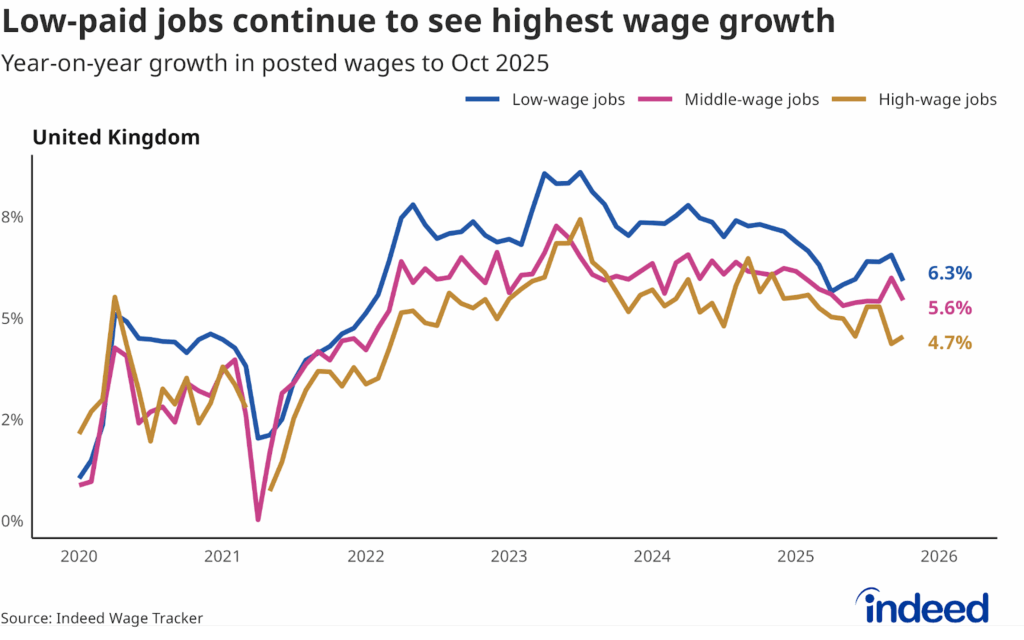
The UK labour market is cooling from the red‑hot post‑pandemic period, but it has not flipped into mass unemployment. Forward‑looking surveys like the CIPD Labour Market Outlook (May 2026) and specialist reports such as Bramwith Consulting’s “Your UK Employment Outlook 2026” highlight a shift in how employers hire.
The core trend: firms are increasingly hiring for capability and potential, not just years in a specific role. That favours candidates who can show they have learned new tools, especially around data, digital platforms and AI, even if they lack a perfect linear CV.
- Good news if you’re mid‑career: retraining into growth areas like data analysis, procurement tech or regulatory compliance is more realistic than it used to be.
- Risk if you stand still: roles built mainly on routine tasks are more exposed as automation spreads, even in office jobs.
Many employers now expect staff to treat learning as part of the job. Short, stackable courses and micro‑credentials have moved from “nice to have” to a quiet requirement in many professional roles.
Offices and cities: hybrid is the new default
According to the British Council for Offices’ new UK Office Outlook 2026, offices are “back on investors’ radar”, including in London and other major cities. Rather than abandoning offices, many companies are shrinking and upgrading them, aiming for higher‑quality, more flexible spaces that support hybrid work.
For city‑centre homeowners and landlords, this matters. A stable or improving office market can support local retail, transport demand and rental values. But areas full of older, poor‑quality offices may see more conversion pressure as owners weigh refurbishment costs against turning buildings into homes.
For workers, the compromise many firms are settling on is two to three days a week in the office. That shapes everything from train season ticket choices to where people are willing to buy or rent homes.
Homeowners and housing: stable, not simple
Housing forecasts for 2026 point to a year of adjustment rather than drama. Higher borrowing costs limit how far prices can rise, especially in already‑expensive parts of the South East, but tight supply and population growth prevent a deep crash.
For existing homeowners, the main pressure is refinancing. For would‑be buyers, the main obstacle is still the deposit and affordability tests, not price falls. Those who can show steady income, manage debt sensibly and pick realistic locations are still getting onto the ladder, but the process is slower and stricter than in the 2010s.
Rules and regulation: digital assets under the microscope
One quiet but important trend is tighter oversight of digital assets. Industry analysis, including IBISWorld’s “UK Industry Fast Facts”, notes that UK and EU policymakers are moving towards more comprehensive regulation of crypto‑assets and related services in 2026.
For everyday investors, that brings clearer consumer protections but also fewer wild‑west opportunities. Platforms may need stronger checks, clearer disclosures and more traditional safeguards, narrowing the gap between “crypto” and mainstream finance.
How to use these trends, not just read them
News about 2026 can feel abstract, but it can guide practical choices. In a world of modest growth and higher rates, households that keep a margin of safety in their budgets, avoid over‑leveraging, and invest steadily in skills are better placed to handle surprises.
Investors and professionals should expect more volatility, not less: energy shocks, elections and technological change will continue to jolt markets and job roles. Building flexibility into your plans—whether that means a buffer in your mortgage, a second marketable skill, or a diversified portfolio—is the closest thing to a long‑term hedge.
Clarity in writing comes from structure, not length.