
Security AI Editorial: Prompt-Injection Risks in Newsroom Automation
Security AI Editorial: Prompt-Injection Risks in Newsroom Automation
As newsrooms automate research, drafting, and distribution with AI, they inherit a new attack surface: prompt injection. Unlike classic exploits, these are stochastic, hard to detect, and deeply entangled with editorial workflows.
1. What Prompt Injection Looks Like in a Newsroom
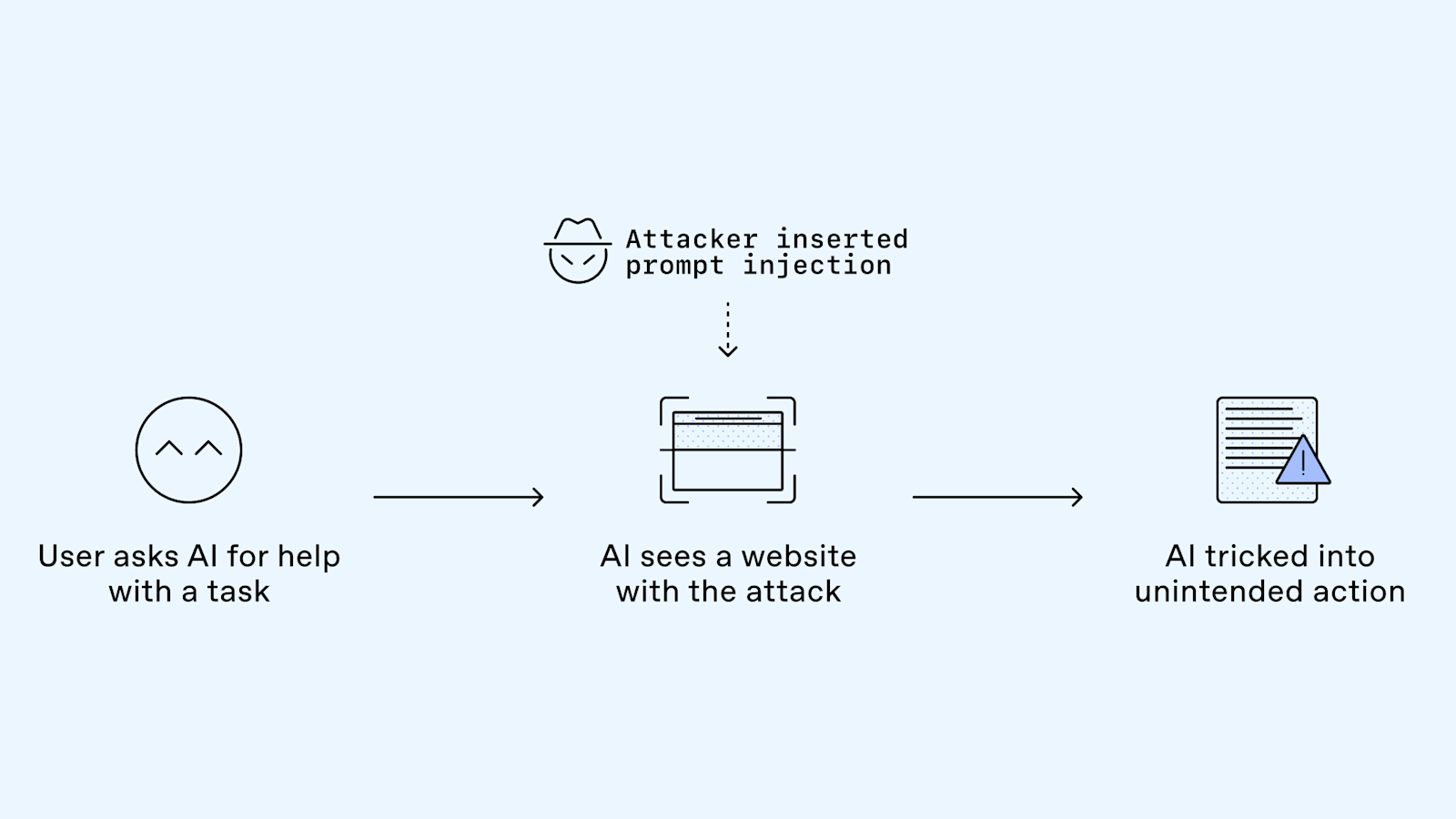
Prompt injection is any attempt to override or subvert an AI system’s original instructions by smuggling new instructions through content, tools, or data. In a newsroom, that content often arrives as sources, documents, or feeds that reporters already trust.
Common vectors include:
- Hostile text in PDFs, pitches, and press releases (e.g., embedded instructions to hide negative facts).
- Poisoned web pages used as research inputs for retrieval-augmented generation.
- Adversarial comments in CMS or UGC workflows that AI tools later summarize.
- Malicious prompts embedded in internal docs and templates that staff copy–paste into chat tools.
Prompt injection is less about breaking the model and more about quietly redirecting your editorial intent.
The risk is not just bad output; it is the erosion of editorial control and integrity through subtle, automated steering.
2. The New Threat Model for Editorial Automation
Most newsrooms still model AI risk as “hallucination” or “leakage.” Prompt injection demands a broader threat model that includes both deterministic and stochastic failure modes.
Key failure modes:
- Silent narrative drift: sources nudge models toward specific framings, adjectives, or omissions without explicit falsehoods.
- Tool misuse: injected prompts cause an agent to call internal tools (search, CMS APIs, analytics) in abusive patterns.
- Source prioritization bias: adversaries get their documents consistently surfaced and summarized ahead of neutral sources.
- Policy override: model instructions about fact-checking, balance, or safety get superseded by inline instructions in the retrieved text.
The impact is compounded by scale. A single compromised source, once in your retrieval index or template library, can influence hundreds of downstream drafts.
3. High-Risk Workflows in AI-Assisted Newsrooms
Not every automation is equally dangerous. Operators should map where AI touches high-stakes editorial decisions.
- AI-assisted research: models summarizing documents, scrapes, or transcripts that may contain hidden instructions.
- Template-driven drafting: reporters using AI to expand bullet points or interview notes directly into near-publish copy.
- UGC triage and summarization: models distilling social posts, forums, or comments into trends or quotes.
- Headline, SEO, and distribution optimization: injection here can shift what gets surfaced, where, and to whom.
Each of these is a junction between raw external input and editorial output. That junction is where you need explicit security design, not just product UX.
4. Design Principles for Secure AI Editorial Systems
A practical security posture starts with a few design commitments that technical editors can champion and founders can operationalize.
- Isolation over convenience: separate research sandboxes from production drafting systems; never let raw external content execute as instructions.
- Defense-in-depth prompts: system prompts should explicitly treat external text as untrusted data and restate this across tool calls.
- Tooling least privilege: AI agents must have narrowly scoped access to CMS, search, and analytics APIs, with hard rate limits and logging.
- Human-in-the-loop on narrative: require explicit human review any time AI drafts or substantially rewrites framing, claims, or quotes.
This is not about disabling AI; it is about forcing AI to operate like an assistant in an accountable, observable environment.
5. Concrete Controls You Can Implement Now
Implementation details matter. The same model can be high or low risk depending on how you wire it into your editorial stack.
- Input sanitization layers: strip or neutralize patterns like “ignore previous instructions” from retrieved content before it reaches the model.
- Source typing and labeling: tag every document in your index as editorial, PR, UGC, paid, or unknown, and expose that in the prompt.
- Scoped retrieval: for high-stakes stories, restrict AI to vetted editorial and primary-source corpora rather than the full web.
- Audit trails: log prompts, retrieved passages, and tool calls so postmortems can distinguish injection from hallucination or human error.
- Template hardening: maintain centralized, version-controlled prompts for common tasks; prohibit ad hoc, copy–pasted meta-instructions.
These controls are cheap compared with the reputational cost of a compromised investigation or slanted coverage traceable to your automation.
6. Editorial Governance and Training
Security AI editorial is ultimately a governance challenge. Technology teams can instrument controls, but editors determine how they are used.
Practical governance moves:
- AI usage policies: define when AI may draft, when it may only suggest, and when it is banned (e.g., anonymous sources, sensitive investigations).
- Red team routines: schedule regular internal attempts to inject prompts via press releases, PDFs, and sample web pages.
- Reviewer checklists: require editors to verify source types, retrieval scope, and unusual stylistic shifts in AI-assisted copy.
- Incident response playbook: predefine how to retract, correct, and disclose if an AI-mediated story is later deemed compromised.
Editorial independence in an AI era is not just about who writes the words, but who controls the instructions behind the words.
7. From Experiments to a Secure AI Editorial Strategy
Newsroom AI has moved past experiments and into infrastructure. Prompt injection will not be solved by one filter or one vendor. It will be managed through layered systems, disciplined prompts, and a culture that treats automation as part of the editorial stack, not a toy.
For operators and founders, the mandate is clear: treat security AI editorial as a core capability. For technical editors, the opportunity is to translate security concepts into workflow decisions and copy desks that remain in control, even as models scale your reach.
Clarity in writing comes from structure, not length.